 Electrical Takeoff Software
Cloud-Based Electrical Estimating Software: 7 Best Options in 2026 (Compared)
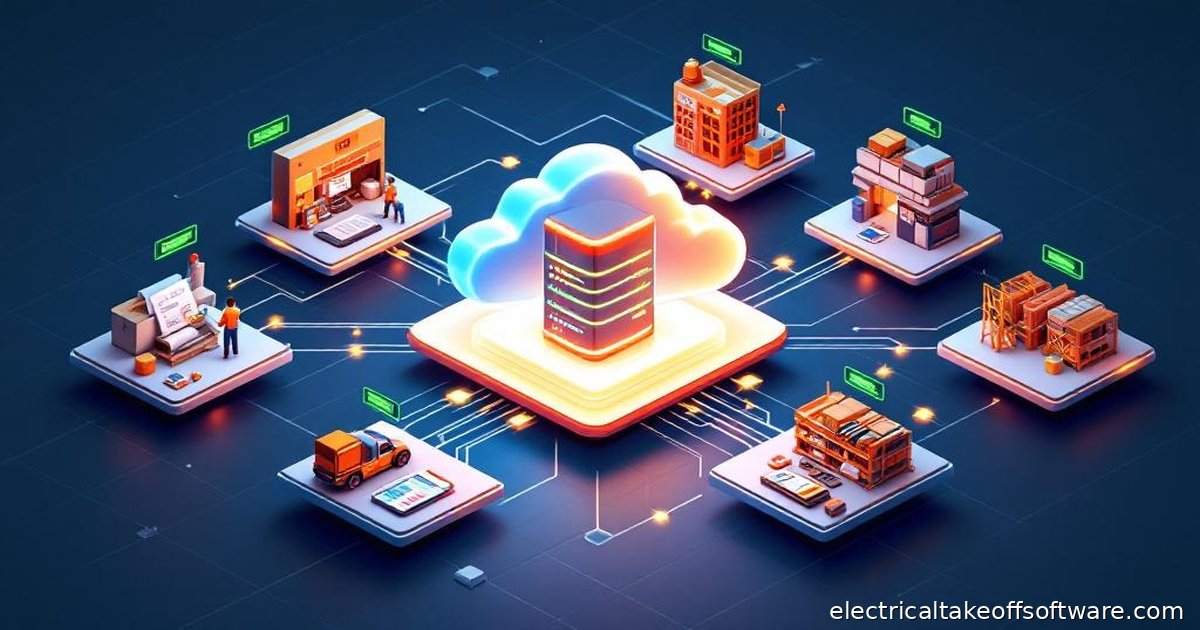
Cloud-based electrical estimating software lets you create takeoffs, price materials, and generate bid packages from any device with an internet connection. No desktop installs, no VPN tunnels, no single-machine lockdown. The best cloud options in 2026 are STACK ($2,999/yr), Countfire (automated symbol counting), Trimble Accubid Anywhere (enterprise-grade NEC databases), McCormick Systems (hybrid cloud/desktop with 55,000+ items), and Electric Takeoff (AI-powered cloud takeoffs with transparent pricing).
Quick Answer: Best Cloud-Based Electrical Estimating Software in 2026
- Best overall cloud platform: STACK — $2,999/yr, real-time collaboration, free tier available
- Best automated takeoffs: Countfire — pattern recognition across multi-page PDFs, cloud-native
- Best for large commercial: Trimble Accubid Anywhere — NEC-compliant databases, AutoCAD/BIM integration
- Best hybrid cloud/desktop: McCormick Systems — 55,000+ item database, works offline and online
- Best AI-powered takeoff: Electric Takeoff — instant symbol detection, fully cloud-based
If you're still running estimating software tied to one office PC, you're paying for it in slower bids, version-control headaches, and wasted hours when you need to check numbers from the job site. Cloud-based tools solve all three problems — and most take less than a week to learn.
We compared pricing, deployment models, and real contractor reviews across Capterra, Software Advice, and G2 to rank the best cloud-based electrical estimating software available right now. This guide covers what each tool does best, what it costs, and which team size it fits.
What Is Cloud-Based Electrical Estimating Software?
Cloud-based electrical estimating software runs in your web browser instead of being installed on a local computer. Your project files, pricing databases, bid history, and material catalogs are stored on secure remote servers and accessible from any device — laptop at the office, tablet on the job site, or phone in the truck.
The practical difference from desktop tools like Vision InfoSoft's Electrical Bid Manager ($800/user/year, on-premises only) or legacy ConEst installs: cloud platforms handle updates automatically, back up your data in real time, and let multiple estimators work on the same project simultaneously. There's no server to maintain, no IT department required, and no risk of losing estimates to a hard drive crash.
For electrical contractors, the cloud model is particularly valuable because estimators, project managers, and field supervisors can all access the same bid data in real time. That eliminates the version-control errors that cost contractors thousands on every project — the wrong material count, the outdated labor rate, the bid revision that never made it to the final proposal.
Cloud vs. Desktop: What Changes for Electrical Contractors
Cloud Advantages
- + Access projects from any device, anywhere
- + Real-time collaboration between estimators
- + Automatic backups — no data loss from crashes
- + Zero IT maintenance or server costs
- + Automatic software updates and patches
- + Scale users up or down without new hardware
Cloud Trade-offs
- - Requires reliable internet connection
- - Ongoing subscription costs (no one-time purchase)
- - Data stored on vendor servers (security concerns for some)
- - May feel slower for very large plan sets (100+ pages)
- - Limited or no offline mode on most platforms
- - Vendor lock-in if data export is restricted
Internet Dependency Is Real
Cloud-based tools require a stable internet connection. If you frequently work on remote job sites with poor connectivity, look for hybrid solutions like McCormick Systems (cloud + desktop) or verify your chosen tool has offline mode. Most fully cloud-based platforms — STACK, Countfire, Groundplan — do not function without internet.

The 7 Best Cloud-Based Electrical Estimating Tools in 2026
1. STACK — Best Overall Cloud Platform
STACK is a fully cloud-based takeoff and estimating platform used across construction trades including electrical. Its Autocount feature recognizes common electrical symbols on uploaded plans, and measurements transfer directly into itemized estimates with labor, material, and overhead calculations. Rated 8.7/10 on SoftwareConnect with 65 verified reviews.
Pros
- + Fully cloud-based with real-time collaboration
- + Free tier available for basic takeoffs
- + Multi-trade support (electrical, HVAC, plumbing, solar)
- + Volume discounts: $2,199/user/yr for 3+ users
- + Clean, modern interface with low learning curve
Cons
- - $2,999/yr for a single user (~$250/month)
- - Not electrical-specific (general construction focus)
- - Limited offline capabilities
- - Some users report slow sheet transitions on large plans
Pricing: $2,999/yr (1 user), $2,599/user/yr (2 users), $2,199/user/yr (3+ users). Grow plan: $4,999/yr for 3 full-access users and 6 view-only seats. Free tier available. Annual billing required.
Best for: Small to mid-sized electrical contractors who need a proven, fully cloud-native platform with transparent pricing and the ability to handle multiple trades.
2. Countfire — Best for Automated Symbol Counting
Countfire specializes in automated symbol counting across multi-page PDF drawings. Its cloud platform uses pattern recognition to identify and count electrical symbols automatically, then feeds quantities into its estimating module. The software learns from your previous estimates to suggest pricing on future projects. Highest user ratings on Software Advice among electrical estimating tools.
Pros
- + Automated counting across multi-page PDFs
- + Four-stage verification catches errors other tools miss
- + Learns from historical data to suggest pricing
- + Highest user satisfaction scores on Software Advice
- + Cloud-native — access from any device
Cons
- - Pricing not publicly listed (requires quote)
- - UK-based company — support hours may not align with U.S. contractors
- - Focused on counting, not a full estimating suite
- - Steeper learning curve for the verification workflow
Pricing: Custom quotes only. Free 7-day trial available with no credit card required.
Best for: High-volume estimators who process dozens of plan sets per month and want to automate the most tedious part of the workflow. Particularly strong for electrical, fire alarm, and data cabling trades.
3. Trimble Accubid Anywhere — Best for Large Commercial Projects
Trimble Accubid Anywhere is the cloud version of the industry-standard Accubid estimating platform. It includes integrated graphical takeoff with LiveCount, NEC-compliant labor databases, change management tools, and supplier pricing sync for real-time material costs. Rated 8.4/10 on SoftwareConnect.
Pros
- + NEC-compliant databases with automatic labor adjustments
- + LiveCount integration for graphical takeoff
- + AutoCAD and BIM file support
- + Supplier pricing sync for real-time material costs
- + Change management module tracks bid revisions
Cons
- - Enterprise pricing (custom quotes only)
- - Steep learning curve — plan for 2-6 weeks onboarding
- - Best value within the broader Trimble ecosystem
- - Overkill for residential or small commercial work
Pricing: Custom enterprise quotes only. Contact Trimble for pricing. Free demo available.
Best for: Large electrical and mechanical contractors running complex commercial or industrial projects. If your team already uses Trimble Connect or Viewpoint, Accubid Anywhere plugs directly into that ecosystem.
4. McCormick Systems — Best Hybrid Cloud/Desktop
McCormick has built electrical estimating software since 1979 and offers both cloud and desktop deployment. Their electrical database — 55,000+ items and 25,000+ prebuilt assemblies — is the deepest in the industry. The patented Auto Home Run feature automatically calculates wire pulls from devices back to panels, saving hours on large commercial projects. Rated 10/10 on SoftwareConnect (2 reviews).
Pros
- + Deepest electrical database: 55,000+ items, 25,000+ assemblies
- + Patented Auto Home Run wiring calculation
- + Cloud or desktop — switch between modes
- + 45+ years of electrical-specific development
- + U.S.-based support team
Cons
- - Starts around $300/month; enterprise tiers $18,000+
- - Significant onboarding investment required
- - Complex for small residential contractors
- - Pricing requires a sales conversation
Pricing: Starts around $300/month. Enterprise licenses can run $18,000+ upfront with annual renewal fees. Tiered licenses with optional add-ons. Contact McCormick for a custom quote.
Best for: Mid-sized to large contractors who need the deepest electrical database available and want the flexibility to work offline when job site connectivity is unreliable, then sync to the cloud when back online.
5. Electric Takeoff — Best for AI-Powered Cloud Takeoffs
Electric Takeoff is a cloud-based electrical takeoff platform that uses AI to automatically detect and count symbols on uploaded construction plans. The entire workflow — from PDF upload to itemized material list — happens in the browser with no software installation. Results are instant with manual override capability, so you can verify and adjust counts before finalizing.
Pros
- + AI-powered symbol detection for instant takeoffs
- + Fully cloud-based — works from any device
- + Transparent pricing on website
- + Built specifically for electrical contractors
- + Fast onboarding — learn in days, not weeks
Cons
- - Newer to market than legacy players
- - Focused on takeoffs (not a full-suite platform)
- - Smaller material database than McCormick
Pricing: Transparent pricing listed at electricaltakeoffsoftware.com.
Best for: Electrical contractors who want to modernize their takeoff process with AI and need a cloud-native tool that works immediately without weeks of setup. Instead of manually counting every outlet, switch, and fixture, the AI detects symbols on your plans in seconds.
Try it on your own plans — free
Electrical Takeoff Software is a fast, manual takeoff editor: upload a PDF plan, mark up your counts, and export a branded estimate to Excel. Start free for 30 days — no credit card required.
Disclosure: Electric Takeoff is our product. We've included it because it's directly relevant as cloud-based electrical estimating software, but we encourage you to evaluate all options based on your specific needs.
6. PataBid Quantify — Best for AI-Automated Takeoff Workflow
PataBid Quantify is a cloud-based estimating platform that uses AI to automate multi-document takeoff workflows. It supports schedule and spreadsheet integration, provides a full audit trail, and offers a clean interface designed for speed. The platform is newer to market but has drawn attention for its AI-first approach to electrical estimating.
Pros
- + AI-automated takeoff across multiple documents
- + Intuitive, modern interface
- + Full audit trail for every takeoff
- + Strong customer support reported by users
- + Cloud-native platform
Cons
- - Pricing not publicly listed
- - Newer platform — smaller user base
- - Limited third-party reviews available
Pricing: Custom quotes only. Contact PataBid for pricing and demo access.
Best for: Forward-looking contractors who want an AI-first platform and are comfortable adopting newer technology in exchange for faster takeoff speeds.
7. Groundplan — Best for Small Contractors Wanting Simplicity
Groundplan is a fully cloud-based estimating and takeoff platform designed for electrical and construction trades. It emphasizes simplicity and speed over feature depth, with a clean interface that lets small contractors get productive within hours, not weeks.
Pros
- + Extremely fast onboarding
- + Clean, uncluttered interface
- + Built for cloud from the ground up
- + Suitable for small teams and solo estimators
Cons
- - Fewer advanced features than enterprise tools
- - Pricing not publicly listed
- - Smaller database than McCormick or ConEst
Pricing: Contact Groundplan for current pricing. Free trial available.
Best for: Small electrical contractors who want a straightforward cloud solution without the complexity or cost of enterprise platforms.
Pricing and Feature Comparison
| Software | Deployment | Starting Price | Auto Takeoff | Best For |
|---|---|---|---|---|
| STACK | Cloud only | $2,999/yr (~$250/mo) | Autocount symbols | Small-mid contractors |
| Countfire | Cloud only | Custom quote | Full automated counting | High-volume estimators |
| Trimble Accubid Anywhere | Cloud only | Custom quote | LiveCount graphical | Large commercial |
| McCormick Systems | Cloud + Desktop | ~$300/mo | Auto Home Run | Mid-large contractors |
| Electric Takeoff | Cloud only | See website | AI symbol detection | Fast cloud takeoffs |
| PataBid Quantify | Cloud only | Custom quote | AI-automated | AI-first workflow |
| Groundplan | Cloud only | Custom quote | Yes | Small contractors |
Watch for Hidden Costs
- Onboarding fees: Enterprise platforms charge $500-$5,000+ for implementation and training.
- Per-sheet pricing: Some tools charge $25-$45 per plan sheet. High-volume contractors can hit $100,000+/year with this model.
- Renewal price hikes: Multiple contractors report 50%+ price increases after year one. Get year-two pricing in writing before signing.
- Add-on databases: Electrical-specific material databases and labor units are sometimes sold separately from the base subscription.
How to Choose the Right Cloud-Based Estimating Tool
The right cloud-based electrical estimating software depends on your team size, project types, and how much you're willing to invest in onboarding.
Solo Estimators and Small Shops (1-3 Users)
Start with STACK's free tier or Groundplan. Both offer cloud access without enterprise complexity. STACK's published pricing ($2,999/year for one user) makes budgeting predictable. If you want AI-powered takeoffs without a large monthly commitment, Electric Takeoff is built for exactly this use case.
Mid-Sized Contractors (4-15 Users)
Evaluate McCormick Systems if you need the deepest electrical database, or Countfire if automating symbol counting is your priority. McCormick emphasizes database depth while Countfire focuses on takeoff speed. Both support team collaboration but take different approaches.
Large Commercial Shops (15+ Users)
Trimble Accubid Anywhere is built for this scale, with change management, multi-user workflows, and NEC-compliant databases designed for complex commercial and industrial projects. The investment makes sense when spread across a large team.
5 Questions to Ask Every Cloud Vendor
- Can I export my data if I cancel? Some platforms lock your estimates behind proprietary formats. Ask for CSV or Excel export capability.
- What's the offline story? If you work on remote sites, verify whether the tool functions without internet or offers a hybrid mode.
- What's the renewal price? First-year discounts are common. Get year-two and year-three pricing in writing.
- Where is my data stored? Reputable platforms use SOC 2-compliant data centers with 256-bit AES encryption. Ask specifically.
- What's the real onboarding time? "Easy to learn" means different things. Ask for the average time from first login to first real bid submission.
Migrating from Desktop to Cloud
Switching from desktop to cloud-based estimating doesn't have to be all-or-nothing. The most successful transitions follow this pattern:
- Run parallel for 2-3 projects. Use your new cloud tool alongside your existing desktop software. This builds team confidence without risking live bids.
- Start with simple projects. Don't migrate your most complex commercial bid first. Use a straightforward residential project to learn the new workflow.
- Export your material database. Most desktop tools can export item lists as CSV. Import these into your cloud platform to avoid rebuilding from scratch.
- Train your team in stages. Don't force everyone to switch on the same day. Start with one estimator, let them become the internal expert, then expand.
Migration Timeline
Most contractors complete the full transition from desktop to cloud in 4-8 weeks when running parallel systems. Cloud-native tools like STACK and Electric Takeoff typically have the shortest onboarding period (1-3 days to basic proficiency), while enterprise platforms like Trimble Accubid Anywhere require 2-6 weeks of structured training.

Frequently Asked Questions
What is cloud-based electrical estimating software?
Cloud-based electrical estimating software is a web application that lets electrical contractors create material takeoffs, calculate labor costs, and generate bid packages entirely through a web browser. Your data is stored on secure remote servers and accessible from any device with an internet connection — no local installation, no dedicated hardware, no IT maintenance required.
How much does cloud-based electrical estimating software cost?
Pricing ranges from free (STACK's basic tier) to $300+/month for enterprise platforms like McCormick Systems. STACK starts at $2,999/year (~$250/month) for one user with volume discounts at 3+ users. Trimble Accubid Anywhere and PataBid Quantify require custom quotes. Budget $500-$5,000+ for onboarding fees on enterprise platforms.
Is cloud-based estimating software secure for sensitive bid data?
Reputable cloud platforms use bank-level encryption (256-bit AES), SOC 2-compliant data centers, and automated daily backups. In practice, cloud storage is often more secure than a local hard drive because it's protected against physical theft, hardware failure, and ransomware. Ask vendors specifically about their SOC 2 certification and data encryption standards.
Can I use cloud-based estimating software offline?
Most cloud-based estimating tools require an active internet connection. McCormick Systems offers true hybrid deployment — cloud and desktop — that lets you work offline and sync when you reconnect. If offline access is critical for your workflow, verify this capability with every vendor before purchasing.
What is the difference between cloud-based and desktop electrical estimating software?
Desktop software installs on a specific computer and stores data locally. Cloud-based software runs in your browser and stores data on remote servers. Cloud tools offer automatic updates, real-time collaboration, and access from any device. Desktop tools can work offline and may handle very large plan sets faster. Hybrid options like McCormick Systems and ConEst IntelliBid offer both deployment models.
Can cloud estimating software integrate with my accounting system?
Most modern cloud platforms integrate with QuickBooks, Sage, Xero, and major project management tools. STACK offers accounting and CRM integrations. Trimble Accubid Anywhere connects with the broader Trimble construction ecosystem. Always verify your specific accounting software is supported before purchasing — either through direct integration or reliable data export.
How long does it take to switch from desktop to cloud estimating software?
Cloud-native tools like STACK and Electric Takeoff take 1-3 days to learn the basics. Enterprise platforms like Trimble Accubid Anywhere require 2-6 weeks of structured onboarding. Most contractors run parallel systems (cloud + desktop) for 4-8 weeks before fully transitioning. Start with a simple project to build confidence before migrating complex bids.
Ready to speed up your electrical takeoffs?
Electrical Takeoff Software is a fast, manual takeoff editor: upload a PDF plan, mark up your counts, and export a branded estimate to Excel. Start free for 30 days — no credit card required.
Start free — no credit card30-day free trial · no credit card · cancel anytime
Related Posts

10 Best Electrical Estimating Software in 2026 (Compared)
Compare the 10 best electrical estimating software tools in 2026. Real pricing from $30/user/month to $500+/tech/month, verified contractor reviews, and a decision framework by shop size — solo to enterprise.

Electrical Contractor Estimating Software: Complete Buyer's Guide 2026
Choosing the right electrical contractor estimating software can make or break your business. Learn what features matter most, how to avoid expensive mistakes, and find software that actually saves you time and money.

Best Electrical Estimating Software for Small Contractors (2026)
Compare the 8 best electrical estimating software options for small contractors in 2026. Real pricing, honest pros and cons, and clear recommendations based on your shop size — from $29/mo all-in-one tools to dedicated electrical estimating platforms with NEC labor units.